
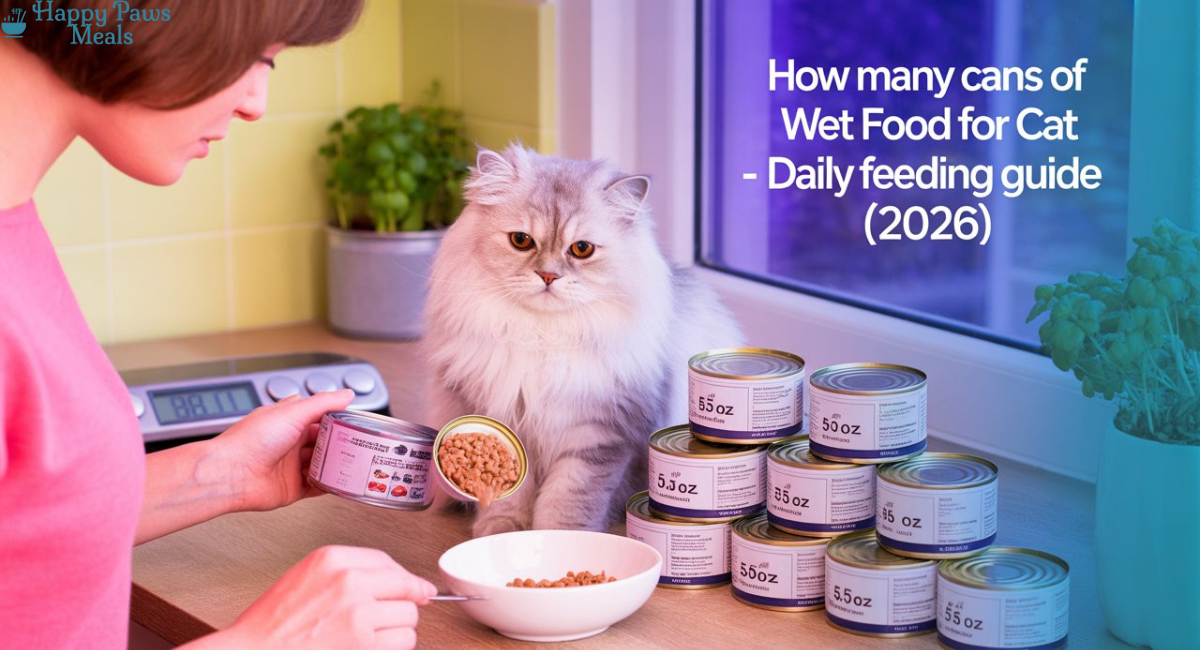
How many cans of wet food for cat is one of the most common questions every cat parent asks. Feeding your cat might look simple — open a can, serve, done — but determining the right amount matters a lot. The number of cans your cat needs depends on several factors like weight, age, lifestyle, and metabolism. Feeding too little can cause nutrient deficiencies, while too much may lead to obesity and related health problems.
Wet food is among the healthiest meal options for cats, offering balanced nutrition, high moisture, and irresistible flavor. Still, many owners wonder the same thing:
👉 “How many cans of wet food should I feed my cat every day?”
Curious about budget-friendly options? Check out our guide on Affordable Healthy Cat Food Under $20 (2026 Guide)
This comprehensive 2026 feeding guide explains it all — from calorie calculations and feeding charts to tips for kittens, adults, and senior cats. Let’s dig in!
🥫 Understanding Cat Calorie Needs
Before figuring out how many cans of wet food for cat are right per day, it’s important to understand how many calories your cat actually needs. Calorie requirements depend on your cat’s weight, age, and activity level. Indoor cats burn fewer calories than active outdoor cats, while kittens and nursing mothers need extra energy for growth and milk production.
| Cat Type | Weight (lbs) | Daily Calories (approx.) |
|---|---|---|
| Indoor Cat (Low Activity) | 8–10 lbs | 180–220 kcal |
| Average Adult Cat | 10–12 lbs | 220–270 kcal |
| Active/Outdoor Cat | 10–12 lbs | 270–350 kcal |
| Senior Cat (10+ years) | 8–10 lbs | 170–200 kcal |
| Kitten (Growing Fast) | 2–6 months | 250–300 kcal |
Note: These are general estimates. Always evaluate your cat’s Body Condition Score (BCS) and talk to your vet before adjusting feeding portions.

How Many Cans of Wet Food for Cat Per Day?
When deciding how many cans of wet food for cat are enough per day, the answer depends mainly on your cat’s weight, calorie needs, and activity level.
Most 5.5 oz cans of wet cat food contain around 150–200 calories. For an average 10-pound adult cat that needs roughly 220 calories daily, this equals:
👉 One full 5.5 oz can per day, usually divided into two meals (morning and evening), to maintain steady energy levels and digestive balance.
If your cat is larger, highly active, or spends time outdoors, you may need to feed 1½ to 2 cans per day. On the other hand, smaller or indoor cats with low activity might do well with ¾ can per day.
Here’s a simple way to calculate how many cans of wet food for cat are needed:
Formula:
Daily Calories Needed ÷ Calories per Can = Number of Cans per Day
Example:
220 ÷ 180 = 1.2 cans per day
So, the ideal feeding amount for most healthy adult cats ranges between 1 to 1½ cans daily, depending on brand, calorie content, and your cat’s unique needs.
🍽️ Feeding Chart: Wet Food Quantity by Weight
If you’re wondering how many cans of wet food for cat you should serve based on their weight, this simple feeding chart will help you estimate daily portions. It shows the average calorie needs and the number of 5.5 oz wet food cans your cat requires for a balanced diet.
| Cat Weight (lbs) | Calories Needed | Cans of 5.5 oz Food |
|---|---|---|
| 5 lbs | 150 | 0.75 can |
| 8 lbs | 200 | 1 can |
| 10 lbs | 220 | 1.2 cans |
| 12 lbs | 250 | 1.4 cans |
| 15 lbs | 300 | 1.6 cans |
Tip: Split meals into 2–3 smaller servings daily to support digestion and maintain energy levels.
🐱 Kitten Feeding Guidelines
Many new cat parents also ask how many cans of wet food for cat are suitable for kittens. Since kittens grow quickly, they need more calories per pound of body weight than adult cats. Wet food supports their hydration, provides a soft texture that’s easy to chew, and delivers essential nutrients for rapid growth.
🍼 Age-Based Feeding Chart
| Kitten Age | Cans per Day (3 oz) | Feeding Frequency |
|---|---|---|
| 2–3 months | 3–4 cans | 4 times/day |
| 4–6 months | 2–3 cans | 3 times/day |
| 6–12 months | 1½–2 cans | 2–3 times/day |
When deciding how many cans of wet food for cat to feed during the kitten stage, remember that young cats have faster metabolisms and smaller stomachs. Frequent, smaller meals throughout the day help maintain steady growth and energy.
Pro Tip: Always choose kitten-specific wet food formulas rich in DHA, omega fatty acids, and high-quality protein to promote strong bones, sharp vision, and healthy brain development.

🐈 Adult Cat Feeding Guidelines
When determining how many cans of wet food for cat are ideal for adult felines, you need to consider their activity level, age, and overall metabolism. Adult cats (typically between 1–7 years old) have stable calorie needs, but these can vary depending on lifestyle and body weight.
🍽️ Recommended Daily Amounts
- Moderate activity cats: 1–1.5 cans per day (5.5 oz each)
- Very active or outdoor cats: Up to 2 cans per day
- Indoor or low-energy cats: ¾–1 can per day
If you’re still unsure how many cans of wet food for cat are right for your adult pet, monitor their body condition. You should be able to feel—but not see—their ribs. Gradually adjust portion sizes until your cat maintains a healthy, lean weight.
Feeding Tip: Split meals into two servings—half in the morning and half in the evening. Keeping consistent feeding times supports good digestion, balanced energy, and overall wellness.tabolism.
🧓 Senior Cat Feeding Guidelines
Older cats (8+ years) have slower metabolisms and may lose appetite or dental strength. Opt for soft, pâté-style wet food that’s easier to chew and digest. Most senior owners wonder how many cans of wet food for cat are ideal at this age — typically, 0.75 to 1 can per day is sufficient depending on activity level and health condition.
- Opt for soft, pâté-style wet food
- Feed 0.75–1 can daily
- Include moisture-rich and high-protein options
- Avoid formulas high in sodium or filler grains
Hydration and protein quality are key for kidney and muscle health in senior cats.
🤰 Pregnant & Nursing Cat Feeding
Pregnant cats need up to 50% more calories than usual, and nursing queens may even double their food intake. Many owners often ask how many cans of wet food for cat during pregnancy and lactation — generally, 1.5 to 2.5 cans daily are recommended, depending on the litter size and the cat’s body condition.
Feed:
- 1.5–2.5 cans daily (depending on litter size)
- Provide free access to food during nursing
- Choose high-protein kitten formulas to meet energy needs
⚖️ Weight Management: Balancing Calories
When figuring out how many cans of wet food for cat you should offer, consider your cat’s weight goals.
- Cut total calories by 10–15%
- Switch to a low-calorie wet food
- Avoid free-feeding (leaving food out all day)
- Monitor weight weekly
If underweight:
- Add ½ extra can or a high-calorie supplement
- Warm the food slightly to increase aroma and appetite
🧮 Step-by-Step: Calculate Exactly How Many Cans to Feed
Want to know how many cans of wet food for cat you should give each day? Here’s a simple formula:
- Find your cat’s weight (in lbs or kg).
- Multiply by 20–25 calories per pound (for an average indoor cat).
- Check can label for calories (per can or per oz).
- Divide total calories needed by calories per can.
Example:
- Cat weight: 10 lbs
- Calorie need: 200 kcal/day
- Wet food: 180 kcal per 5.5 oz can
👉 200 ÷ 180 = 1.1 cans/day
If you’d like to learn more about feline nutrition and better understand how many cans of wet food for cat are ideal based on science and veterinary advice, check out these expert sources: AAFCO Cat Food Nutrient Standards
– Learn what “Complete & Balanced” really means for wet cat food formulas.
🧫 Wet Food vs Dry Food: Which Is Better?
| Feature | Wet Food | Dry Food |
|---|---|---|
| Moisture | 70–80% | 10% |
| Calories | Lower density | Higher density |
| Hydration | Excellent | Poor |
| Dental Benefits | Limited | Better (crunch) |
| Palatability | Very high | Moderate |
✅ Best Approach: A mix of both.
Feed ¾ wet + ¼ dry to balance hydration and dental health.
Example:
If your cat needs 220 kcal/day, you could offer 1 can of wet food (180 kcal) + a small ¼ cup of dry food (40 kcal).
(Internal Link Suggestion: [AAFCO Cat Food Nutrient Standards])
🚫 Common Feeding Mistakes
When figuring out how many cans of wet food for cat you should serve, avoid these common mistakes that can lead to weight or health issues:
- ❌ Guessing Portions – Always read calorie content.
- ❌ Free-Feeding Wet Food – It spoils after 2–3 hours.
- ❌ Ignoring Body Condition – Adjust portions as needed.
- ❌ Switching Foods Too Fast – Transition over 7–10 days.
- ❌ Not Accounting for Treats – Treats should be <10% of total calories.
🕒 Feeding Schedule Example
Knowing how many cans of wet food for cat to serve is only part of good feeding — timing matters too. A consistent schedule helps your cat digest better and prevents overeating.
| Time | Portion | Notes |
|---|---|---|
| 8:00 AM | ½ can wet food | Add small water splash |
| 2:00 PM | (Optional) ¼ can or snack | Keep routine consistent |
| 8:00 PM | ½ can wet food | Clean bowl afterward |
A steady routine helps with digestion and reduces begging behavior.
🌿 Benefits of Wet Food for Cats
Before worrying about how many cans of wet food for cat you should serve each day, it’s important to understand why wet food is so beneficial for feline health. Unlike dry kibble, wet food offers a moisture-rich, protein-packed diet that aligns closely with a cat’s natural nutritional needs.
- Keeps cats hydrated
- Supports urinary and kidney health
- Aids weight management (lower carbs)
- Enhances coat and skin health
- Offers high protein and animal-based nutrients
🔄 Transitioning Between Foods
When switching from dry to wet:
- Days 1–3: 25% wet + 75% dry
- Days 4–6: 50% wet + 50% dry
- Days 7–9: 75% wet + 25% dry
- Day 10 onward: 100% wet food
Gradual changes prevent stomach upset and encourage acceptance. Still wondering how many cans of wet food for cat to serve daily? Read our expert guide on Cat Feeding Calculator: How Much to Feed Your Cat Daily.
💡 Expert Tips for Feeding Wet Food
- Store opened cans in the fridge (use within 3 days).
- Warm to room temperature before serving.
- Use stainless steel or ceramic bowls.
- Measure portions precisely.
- Always provide fresh water nearby.
❓ Frequently Asked Questions (FAQs)
1. How many cans of wet food for a 10-lb cat?
If you’re wondering how many cans of wet food for cat weighing 10 lbs, the answer is usually 1 to 1.25 cans (5.5 oz each) per day. The exact amount depends on your cat’s activity level, age, and the calorie content of the brand you’re using.
2. Can I feed only wet food to my cat?
Yes, you can feed only wet food — just make sure it’s labeled AAFCO Complete & Balanced. When deciding how many cans of wet food for cat daily, ensure the chosen formula provides all essential vitamins, minerals, and amino acids your cat needs.
3. Should I refrigerate leftover wet cat food?
Definitely. After figuring out how many cans of wet food for cat to open each day, store any leftovers in an airtight container in the fridge and use them within 2–3 days to maintain freshness and prevent bacterial growth.
4. How do I know if I’m feeding too much wet food?
If you’re unsure how many cans of wet food for cat is too much, watch for signs like weight gain, a round belly, or food left uneaten. Adjust portions gradually and consult your vet for a proper feeding plan.
5. Can I mix wet and dry food for my cat?
Yes — mixing both can be beneficial! While you calculate how many cans of wet food for cat daily, you can replace part of it with dry kibble to balance hydration, dental health, and calorie control.
🐾 Final Thoughts
Knowing how many cans of wet food for a cat is essential for their overall health and happiness.
While the exact number depends on your cat’s weight, age, and lifestyle, most adult cats thrive on about one 5.5 oz can daily, divided into two meals.
Always check calorie labels, adjust portions as needed, and observe your cat’s body shape. A healthy feeding routine means a longer, happier life for your feline friend.

I’m Awais Manzoor, the writer behind HappyPawsMeals. With years of interest in pet care and nutrition, I research and review cat and dog food to provide reliable, easy-to-understand advice for pet parents.